
Call Allen-Taintor Dermatology - (801) 627-0515

(801) 627-0515

Patient Login
Pay Online
Allen-Taintor Dermatology | Ogden Clinic

Allen-Taintor Dermatology | Ogden Clinic

  • Home
  • Our Services
    • Skin Cancer
    • Skin Conditions
      • Acne Treatment
      • Eczema
      • Warts
      • Keratosis
      • Contact Dermatitis
      • Psoriasis
      • Other Skin Conditions
    • Cosmetics
  • About Us
    • Dr. David M. Allen
    • Dr. Adam R. Taintor
    • Our Staff
    • Patient Portal Information
    • Covid-19 Patient Information
    • Blog
  • Products
  • Specials
  • Contact
    • Pay Online

What Causes Eczema? 5 Important Facts To Know

Home / Archives for Eczema

Eczema is an incredibly common skin condition that causes your skin to get itchy, dry, and bumpy. It weakens the functionality of your skin barrier, which is an essential part of keeping your body protected from the elements. For some people, eczema is more of a nuisance than anything else, but for others, it can seriously impact their life. 

If you struggle with eczema, a dermatologist can help you understand what causes eczema in your case and what can be done to alleviate your symptoms. 

Here’s what you need to know about what causes eczema, the different types of eczema, common eczema triggers, and what you should do if you suffer from this skin condition. 
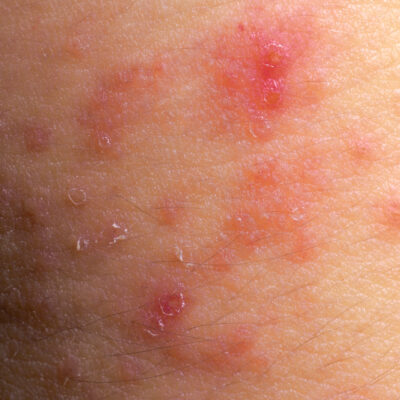
causes eczema

What Causes Eczema?

What causes eczema is not yet entirely understood. That said, there are several factors that have been linked to eczema as probable causes. 

Some factors that can cause eczema include:

  • Genetics. If there’s a history of eczema in your family, you’re more likely to have it too. This is especially true if your family has a history of allergies, hay fever, or asthma.
  • Immune system. If you have an overactive immune system, external irritants can cause eczema flares. 
  • Defects in the skin barrier. This can cause your skin to let moisture out and bacteria in, which can cause eczema.
  • Environmental factors. Many environmental factors can cause eczema, from harsh fabrics to low humidity to pollutants in the air and more. 

What Doesn’t Cause Eczema?

Some skin conditions, like warts, are contagious. This can lead people to worry that if someone they know has eczema, they will get it too. However, eczema isn’t contagious. 

Some people also assume that eczema is an autoimmune disease. It is not classified as such, and research is still underway to better understand the connection between eczema and your immune system. 

The Different Types Of Eczema
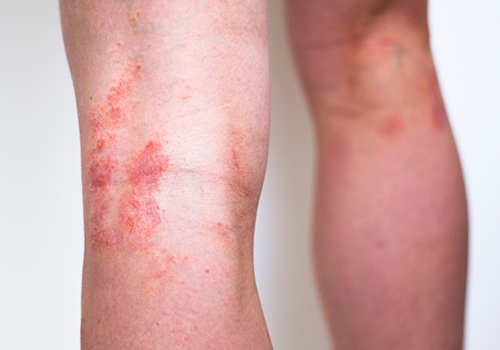
Eczema Treatment Ogden Utah Allen Taintor Dermatology

If you’re wondering what causes eczema, it’s important to note that there are multiple different types of eczema. Potential causes and triggers can vary depending on the type of eczema that you’re suffering from. 

  • Atopic dermatitis is what most people think of when they think of eczema. It’s the most common type, manifesting itself as itchy, dry skin with a rash.
  • Contact dermatitis is when your eczema is a reaction to something that you touched, like chemicals or latex.
  • Dyshidrotic eczema causes little blisters to form on your hands and feet. It’s more common in women than in men.
  • Hand eczema only affects your hands. You’re more likely to experience this type of eczema if your job exposes your hands to chemicals regularly. 
  • Neurodermatitis is like atopic dermatitis, with thick, scaly patches. It usually occurs in people with other types of eczema or psoriasis. 
  • Nummular eczema is when you have coin-shaped spots on your skin. It can be incredibly itchy and can result from insect bites or allergic reactions.
  • Seborrheic dermatitis is when you have oily, scaly patches of skin with dandruff-like flakes. This is called cradle cap when it occurs in infants. 
  • Status dermatitis is when your eczema has leaking fluid. It’s usually seen on your lower legs, due to poor blood circulation. 

Many people can go about their daily lives just fine with eczema. However, if your eczema interferes with your life or doesn’t go away, you’ll want to see a dermatologist to obtain treatment. 

What Triggers Eczema?

If you’re wondering what causes eczema, it can be helpful to keep a skin diary noting your diet, the types of activities you do, your skincare routine, and when you’re under mental duress. This can help you to notice patterns and potential triggers for your eczema flare-ups. 
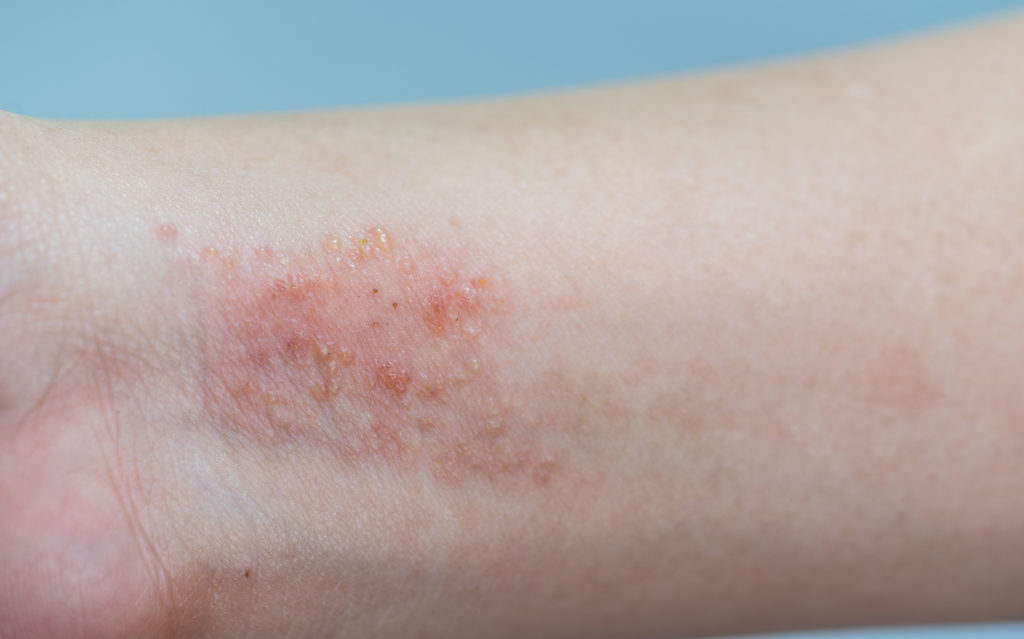
how to treat eczema Allen Taintor Dermatology

Some common triggers for eczema include:

  • Skin irritants
  • Allergies
  • Infections
  • Prolonged exposure to water
  • Being too hot or too cold
  • A low humidity, dry environment
  • Not moisturizing your skin
  • High stress levels
  • And many, many more

Can Eczema Go Away?

Eczema is very common in early childhood. If you have eczema as an infant, it may go away. However, if it persists into adulthood, it may be an ongoing struggle for you. Eczema can appear at any age. Depending on the type of eczema you have and what triggers it, you may have more eczema flare-ups or less.

If you’re struggling with eczema, it’s important to make an appointment to see a dermatologist. They will go over what causes eczema and various types of treatments in order to come up with a specific treatment plan for you. 
Allen-Taintor Dermatology provides eczema treatment. Contact us today to schedule an appointment and let us help you get your eczema under control!

Filed Under: Eczema

Now that the temperatures are dropping, we are seeing an increase in dry skin problems. Patients dealing with dry skin often find the winter weather makes eczema and psoriasis worsen due to the dry air. The cold air will take away the thin layer of oil on the skin that traps in moisture and keeps the skin soft. So how can you combat dry skin in the winter to keep it from becoming itchy and flaky? Here are some tips we recommend trying.

Tip # 1 – Bathe briefly

Its easy to enjoy hot baths in the winter, but those long soaks can enhance problems with dry, irritated skin. Here are some things to try doing instead of long baths:
  1. Stick to a brief shower using lukewarm water as hot water tends to dry out the skin faster
  2. Use soaps designed for dry skin
  3. Pat yourself gently after a shower to avoid excessive drying of the skin
  4. Apply lotion following a shower while the skin is still moist

Tip # 2 – Use Moisturizer

Utah is known for having a dry climate during the winter due to the snow and harsh cold. To keep the skin healthy, you want to moisturize as much as possible. Whether you have eczema or psoriasis, you want to make sure you have lotion to keep the dry air from stealing it away from your skin.

“There are so many good over-the-counter products out there. Eucerin is one, and Cetaphil. They’re inexpensive and work well,” says Dr. Menter.

To get better results, Christine Yuan, 22, who lives with eczema and psoriasis, wraps her problem areas in plastic wrap for 30 minutes to an hour after moisturizing. “It takes time,” says Yuan, “but your skin is baby soft!”

Get comfortable

Dress for less irritation
If your skin does flare up, choose soft, breathable fabrics, like cotton, instead of itchy woolens or polyester. Loose-fitting clothing will also help to keep your skin from chafing and becoming irritated by perspiration.Change the air around you
Dr. Strober suggests that his patients use a humidifier to increase moisture levels in the home. Experts recommend keeping the humidity level between 30% and 50% (which you can measure with a hygrometer).

Stay healthy

Because psoriasis and eczema involve immune system responses, experts believe that many bacterial, viral, or fungal infections can make them worse.

Dr. Strober recommends getting a flu shot, if your primary care physician agrees that it’s appropriate. “Ask your primary doctor, and then get it and any other vaccinations that might help you fight infection.” And follow basic steps to keep yourself healthy, like washing your hands frequently, getting good sleep, and exercising.

Relieve stress

Winter means the holidays and the stress that they inevitably bring. “Emotional stress, being under pressure, and trying to get things done before the holidays certainly can trigger psoriasis and, to a lesser degree, eczema,” says Dr. Menter.

A 2001 report in Archives of Dermatology measured stress levels and water loss in students without any skin disease after winter vacation, during final exams, and during spring break. The researchers found that during periods of stress, the skin’s ability to retain water was reduced.

Look for ways—such as exercise, meditation, yoga, or biofeedback—to relieve holiday-related stress.

Watch your weight

From that first bite of Thanksgiving turkey to the last glass of Champagne on New Year’s Eve, the holidays are a weight-gain minefield.

But psoriasis patients should tread carefully. There isn’t conclusive research linking diet and psoriasis, but fasting periods, low-energy diets, and vegetarian diets improved psoriasis in some studies. And weight gain in general can worsen the condition.

“It does behoove a psoriasis patient to have a lower BMI. Studies do suggest that higher BMI corresponds with increased severity of psoriasis,” says Dr. Strober.

Phototherapy for psoriasis

Winter also brings a decrease in the amount of sun exposure—not a good thing since sunlight can help relieve psoriasis. In fact, 60% of psoriasis patients reported improvement with sunlight in a 2004 Clinical and Experimental Dermatology study.

“The issue is two-fold,” says Dr. Strober. “First, people wear garments that cover the skin and have a tendency to stay indoors. Second, the potency of ultraviolet light is lessened in the wintertime.”

So phototherapy (in which patients are exposed to UVB or UVA rays) makes sense for patients “who are responsive to UV light,” says Dr. Strober. “But you need to come in at least two to three times a week.” The bonus, though, is it is covered by many insurance policies.

PUVA, a combination of UVA rays and psoralen, a medication that increases the skin’s sensitivity to ultraviolet light, is another option. In a 2006 study published in Archives of Dermatology, clearance rates were roughly 80% for psoriasis patients who received PUVA and 50% for patients who received narrow-band UVB.

Filed Under: Dermatologist, Eczema, Psoriasis

Hours

Allen-Taintor Dermatology
3860 Jackson Ave #2
Ogden, UT 84403
801-627-0515
Monday 8:30 AM - 5:00 PM
Tuesday 8:30 AM - 5:00 PM
Wednesday 8:30 AM - 5:00 PM
Thursday 8:30 AM - 5:00 PM
Friday 9:30 AM - 2:00 PM
Saturday Closed
Sunday Closed

Directions

Contact Us

Follow Us

2022 Allen-Taintor Dermatology | Ogden Clinic | All Rights Reserved | Privacy Policy | Terms | XML Sitemap | Site by PDM